Why Commercial Instant Coffee Taste So Bitter? The Hidden Cost of Convenience
Most people think coffee is naturally bitter. The truth is more interesting than that.
For decades, instant coffee has been sold on one promise: convenience.
Just add hot water, and you're done.
Somewhere along the way, we collectively accepted a trade-off. Convenience came with bitterness. Convenience came with a burnt aftertaste. Convenience came with the assumption that instant coffee could never taste as good as "real" coffee.
But what if bitterness isn't a feature of coffee?
What if it's a consequence of the choices made long before the coffee reaches your cup?
Because when you look closely at how commercial instant coffee is produced, a fascinating pattern emerges: many of the things that make coffee affordable at scale are also the things that strip away the very flavours that make coffee enjoyable.
And perhaps that's why so many people say they "don't like coffee" when what they actually don't like is bad coffee.
The Great Coffee Misunderstanding
When people describe coffee, they often use words like:
- Strong
- Bitter
- Dark
- Sharp
Yet coffee professionals use an entirely different vocabulary:
- Chocolate
- Caramel
- Honey
- Nuts
- Citrus
- Stone fruits
- Floral notes
That's because coffee, at its best, is one of the most complex beverages in the world.
Much like wine, the flavour of coffee is influenced by:
- The variety of bean
- The region where it was grown
- Processing methods
- Roasting techniques
- Brewing methods
Bitterness is merely one note in a much larger orchestra.
The problem begins when all the other notes disappear.

The Real Cost of Mass Production
Coffee is an agricultural product. Like fruits, vegetables, or spices, its flavour is delicate.
The challenge for large-scale instant coffee manufacturers is that preserving flavour is expensive. Producing coffee quickly and cheaply is not.
As a result, many commercial instant coffees are optimised for:
- Shelf life
- Production speed
- Cost efficiency
- Consistency
Not necessarily flavour. This doesn't mean all commercial coffee is bad. It simply means the priorities are different. And those priorities influence what ultimately ends up in your cup.
When Coffee Meets Extreme Heat
One of the least discussed aspects of instant coffee is how it's converted from liquid coffee into granules or powder. Many mass-market brands rely on a process called spray drying.
Imagine brewing coffee and then exposing it to extremely hot air so the water evaporates almost instantly. It is remarkably efficient. It is also unforgiving.
Coffee contains hundreds of volatile aromatic compounds. These compounds are responsible for the smell that fills a room when you open a fresh jar or brew a fresh cup.
The challenge is that these compounds are fragile. Heat doesn't just remove water. It can also remove character. What remains may still taste like coffee, but often lacks the complexity and aroma that made the original brew special.
Bitterness becomes more noticeable because the balancing sweetness and aroma have faded.
It's similar to listening to an orchestra after half the musicians have left the stage.
The music is still there.
But something essential is missing.

Why Some Instant Coffee Tastes Burnt
Bitterness isn't always the problem. Sometimes the real issue is imbalance. Think of a perfectly made chocolate dessert. It contains sweetness, richness, depth, and a slight bitterness. Remove the sweetness and richness, and all you're left with is bitterness.
The same principle applies to coffee.
Many people describe commercial instant coffee as burnt because they are experiencing a flavour profile where bitterness has overwhelmed everything else. Not because coffee itself is inherently burnt.
The Bean Matters More Than Most People Realise
If coffee is a story, the bean is the first chapter. No amount of processing can fully compensate for poor-quality ingredients. Many commercial instant coffees rely heavily on lower-cost beans and high-volume sourcing. Again, this isn't inherently wrong. But there are consequences.
The resulting cup may be:
- Less aromatic
- Less sweet
- More one-dimensional
Premium coffee producers often spend significantly more sourcing beans that naturally possess sweetness and complexity. This is where Arabica becomes important.
Arabica coffee generally contains a broader spectrum of desirable flavours compared to Robusta-heavy blends.
When handled carefully, it produces a smoother and more nuanced cup.

The Ingredient Most Consumers Don't Notice
Many Indian consumers grew up drinking coffee blended with chicory.
For some, it's nostalgic. For others, it's simply what coffee has always tasted like. However, chicory fundamentally changes the experience.
It can add:
- Heavier body
- Dark roasted notes
- Additional bitterness
The issue isn't whether chicory is good or bad. The issue is transparency. Most consumers never get the opportunity to understand how different pure coffee tastes compared to coffee blended with additives.
You can't choose intentionally if you've never experienced the alternative.
The Difference Between Convenience and Compromise
This is where the conversation becomes interesting.
For years, consumers were forced to choose:
- Great coffee that required equipment and effort
- Convenient coffee that sacrificed taste
But advancements in freeze-drying changed that equation.
Freeze-drying is designed around preservation rather than speed.
Instead of subjecting coffee to intense heat, the process focuses on removing water while retaining more of the original aroma and flavour compounds.
The result isn't just better instant coffee.
It's coffee that feels closer to what the bean originally intended to be.

Why We Started Soulistic
When we began building Soulistic, we weren't trying to create another coffee brand. We were trying to challenge a belief. The belief that convenience and quality must exist at opposite ends of the spectrum. The belief that instant coffee is supposed to be bitter. The belief that a mindful coffee ritual requires expensive equipment, complicated brewing methods, or ten spare minutes every morning.
We believed there had to be a better middle path.
One where busy people could enjoy coffee made from quality Arabica beans. One where convenience didn't require additives, preservatives, or unnecessary compromises. One where a morning cup wasn't simply fuel for productivity, but a small moment of pause in an otherwise busy day.
That's why every Soulistic coffee is crafted around a simple principle:
Preserve what makes coffee beautiful. Remove what doesn't.
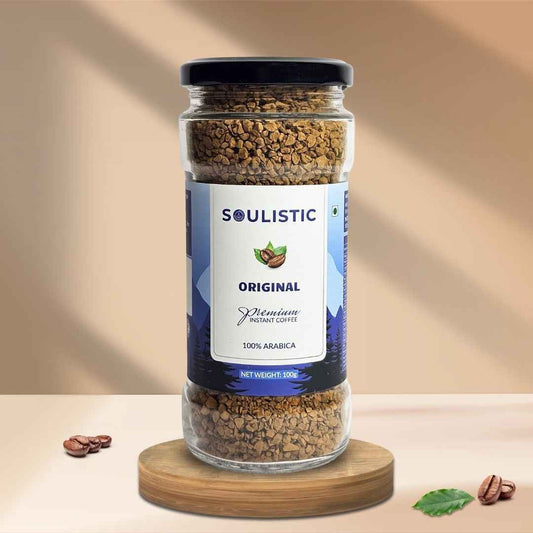
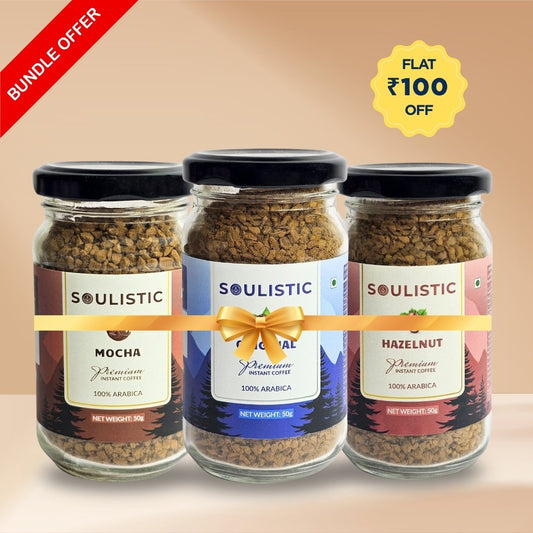
Shop Soulistic Premium Instant Coffee

Coffee is Never Meant to Taste Bitter
The next time someone says they don't like coffee because it's too bitter, it might be worth asking:
Have they tasted coffee?
Or have they tasted the compromises hidden inside it?
Because once you experience coffee that preserves its aroma, sweetness, and character, you begin to realise something. Bitterness isn't the defining trait of coffee.